
- Best for: daily crumbs, flour dust, cereal, rice, pet hair and dust on tile, vinyl, laminate and sealed wood.
- Not for: wet spills, sticky messes, broken glass or big food pieces; wipe or pick those up by hand.
- Run it after meals or at the end of the day.
- Clear chair legs and mats so it can reach under the table.
- Empty the bin often; kitchen debris fills it fast.
The kitchen floor gets dirty faster than any other room in the house. Every meal drops crumbs, every bag of flour leaves dust and every pet wandering through leaves hair near the food bowl. Sweeping every evening is the kind of small chore that's easy to skip, and the mess grows into grit you can feel under your feet. A robot vacuum takes that daily job off your list. This guide explains what a robot can and can't handle in the kitchen, how to set the room up, when to run it and how to keep it working well with kitchen debris.
Why is the kitchen a good room for a robot?
- Hard floors: most kitchens have tile, vinyl, laminate or sealed wood, the easiest surfaces for robots.
- Daily mess: crumbs and dust appear every day, so daily runs keep up with them.
- Open floor: fewer obstacles than bedrooms or living rooms once chairs are pushed in.
- Under-cabinet edges: a slim robot cleans along the toe kick where dust collects.
What can a robot pick up in the kitchen, and what can't it?
| Mess | Robot? | Better option |
|---|---|---|
| Bread and cracker crumbs | Yes | - |
| Flour and sugar dust | Yes, light amounts | Sweep big spills first |
| Rice, cereal, dry pet food | Small amounts | Pick up large spills by hand |
| Pet hair | Yes | Clean brush often |
| Liquids and sauces | No | Wipe with a cloth |
| Sticky spills | No | Damp mop |
| Broken glass | No | Sweep and use a damp paper towel |
| Vegetable peels and large scraps | No | Pick up by hand |
Is DustaPro good for kitchens?
DustaPro is a one-button robot vacuum with no app or WiFi, about 2.8 in tall, rated up to 60 dB and charged by USB. Its suction is about 450 Pa, designed for daily maintenance of hard floors and low rugs, which is exactly the job in most kitchens: crumbs, dust and pet hair on a flat floor. Press the button after dinner and the floor is tidy again by the time the dishes are done. It isn't a deep carpet cleaner, and it doesn't mop, so wipe spills by hand. Read our DustaPro review.
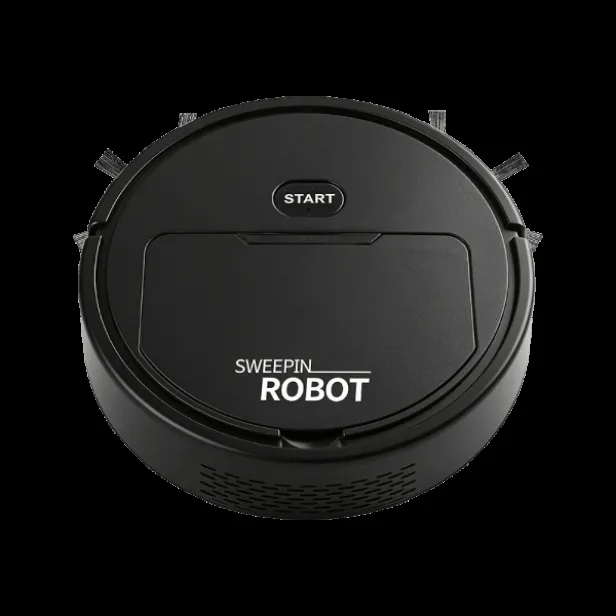
Crumb-free kitchen floors every day
DustaPro: one button, no app, no WiFi, about 2.8 in tall, up to 60 dB, USB charging. Built for daily upkeep of hard floors and low rugs. $69.99, or from $49.99 each in bundles.
Check today's price →$69.99, or from $49.99 each in bundles
How do you set up the kitchen for a robot?
- Push chairs in or lift them onto the table so the robot reaches under it.
- Move pet food and water bowls onto a tray, or lift them before runs.
- Pick up thin kitchen mats or replace them with rubber-backed mats.
- Tuck appliance cords up off the floor.
- Wipe any wet spills before you start.
When should you run it?
The best time is after the biggest meal of the day, usually dinner. Running it after cooking and eating picks up crumbs before they're tracked to other rooms. On busy days with breakfast crumbs too, a second short run after breakfast helps. DustaPro is quiet enough at up to 60 dB to run while you're in the room.
Does it help with pet hair near food bowls?
Yes. The area around food and water bowls collects hair, kibble crumbs and dust. A daily robot pass keeps it tidy. Wipe the bowl area by hand for water drips, and clean the robot's brush often since hair wraps around it. See robot vacuum for pet hair.
Is it safe on tile and wood?
Robot vacuums are gentle on sealed hard floors. On tile, the robot picks up dust from grout lines on the surface; deeper grout cleaning still needs a brush. On wood, daily runs remove grit that can scratch the finish over time. See robot vacuum for tile floors and robot vacuum for hardwood floors.
Why does a clean kitchen floor matter?
Food crumbs on the floor attract ants, roaches and mice, especially in cooler months when pests move indoors. A daily crumb pickup removes the food source. Pair it with wiping counters, sealing food and taking out the trash regularly. The EPA recommends removing food and water sources as a first step in pest control.
How do you keep the robot working well with kitchen debris?
- Empty the bin after every run; kitchen debris is bulky.
- Clear hair and string from the brush every few days.
- Tap out and clean the filter regularly; flour dust clogs it.
- Wipe the sensors with a dry cloth.
- Check the wheels for stuck food.
Can it clean under cabinets?
The toe kick under kitchen cabinets is usually 3 to 4 in high. At about 2.8 in tall, DustaPro can often reach along that edge, where dust bunnies and crumbs gather. Measure your toe kick and appliance gaps to be sure.
Do you still need to mop?
Yes. A robot vacuum handles dry debris, but kitchens also get sticky spots, grease splatter and spills. Mop weekly, or more often around the stove and sink. Vacuuming first makes mopping faster, because you're not pushing crumbs around with a wet mop.
What about small kitchens and apartments?
In small kitchens and open-plan apartments, one robot can clean the kitchen and the living area in a single run. A simple one-button robot is easy to store and charge from any USB outlet. See robot vacuum for a small apartment.
Is a robot useful during the holidays?
Holiday cooking and gatherings bring extra crumbs, flour and foot traffic. Running the robot after each big meal keeps the floor manageable, and a full clean before guests arrive is quicker. See clean the house before Thanksgiving and clean after a holiday party.
What about smells from the kitchen sink?
A clean floor won't fix a smelly sink. If your kitchen smells sour, the disposal and drain are usually the cause. See garbage disposal smell and kitchen sink smells.
Is it a good choice for older parents?
A one-button robot with no app is easy for anyone to use. Bending to sweep or push a vacuum is hard for many older adults, and a daily robot run keeps the kitchen floor clean without that strain. Make sure the robot's path is clear so it isn't a trip hazard. See robot vacuum for elderly parents.
What's a simple kitchen floor routine?
| When | Task |
|---|---|
| After dinner | Robot run; wipe any wet spills |
| Every few days | Clean the brush and filter |
| Weekly | Mop; wash kitchen mats |
| Monthly | Clean under appliances and the toe kick by hand |
How much does DustaPro cost?
DustaPro is $69.99 for one, $59.99 each for two, $54.99 each for three and $49.99 each for four. A two-pack is handy for a kitchen and a second floor. Returns are accepted within 30 days for unused products in original packaging; defective items can be replaced or refunded.
Does kitchen dust affect the rest of the house?
Kitchen floors collect more than crumbs. Flour, spices, pet dander and dust tracked in from the back door settle there and get kicked up and carried into other rooms. For people with dust allergies, keeping floors clean is one of the simplest ways to reduce what ends up in the air. The ACAAI recommends reducing dust in the home for people with dust allergies, and regular vacuuming of hard floors is part of that. See how to reduce dust in the house.
How does a robot handle islands and bar stools?
Kitchen islands are easy for robots: the robot simply travels around the base. Bar stools are harder, because their legs and foot rings create tight spaces where a robot can bump around or get wedged. Push stools in tight against the island before a run, or lift them onto the counter if they're light. Stools with a single round base are the friendliest for robots. Chairs with four legs work fine when tucked under the table, since the robot can usually go between the legs.
What about the back door and mudroom?
Many kitchens open onto a back door, a garage or a mudroom, which is where outdoor dirt, sand and leaves come in. Put a sturdy doormat outside and a washable mat inside, and let the robot clean the floor around them. In wet weather, wipe muddy footprints by hand first; a robot vacuum is for dry debris only. Shaking out the mats a couple of times a week keeps grit from spreading across the kitchen.
Where should the robot live?
Pick a spot near an outlet, out of the main walkway, so nobody trips on it. A corner of the kitchen, the pantry floor or under a side table all work well. DustaPro charges by USB, so you can use a phone charger you already have. Keep it charged so it's ready to run after dinner without waiting.
What should you expect from daily runs?
Think of a robot as a daily sweeper, not a replacement for every cleaning task. After a week or two of evening runs, most people notice that the floor never gets gritty, that dust bunnies stop collecting along the cabinets and that weekly mopping is faster. That steady, everyday tidiness is where a simple robot earns its place in the kitchen.
The bottom line
The kitchen is one of the best rooms for a robot vacuum: hard floors and daily crumbs. Run it after dinner, clear chairs and mats, wipe wet spills by hand and empty the bin often.
For daily kitchen floor upkeep, our pick is DustaPro. Check today's DustaPro price.
Sources
- U.S. Environmental Protection Agency. Integrated Pest Management Principles.
- Official DustaPro product page, checked October 2026.
Frequently asked questions
Is a robot vacuum good for the kitchen?
Yes, kitchens have hard floors and daily crumbs, which suit robots well.
Can a robot vacuum pick up wet spills?
No, wipe liquids and sticky spills by hand.
When should I run a robot vacuum in the kitchen?
After dinner, when most crumbs have fallen.
Can a robot vacuum go under kitchen cabinets?
A slim robot like DustaPro, about 2.8 in tall, can often reach along the toe kick.
Do I still need to mop the kitchen?
Yes, mop weekly for sticky spots and grease.
Does a clean floor help with pests?
Removing crumbs takes away a food source for ants and other pests.

Michelle Hert
Michelle looks into the cleaning products that go viral in ads, from toilet foams to mini vacuums and drain cleaners. She reads the product pages, checkout and return policies, trusted safety sources and buyer feedback so you know what a product really does before you buy it. Her reviews are built on manufacturer information, official checkout and return policies, trusted safety sources and buyer feedback, and are updated when offers change. More about Michelle.