
- Check the decibel rating: around 55 to 65 dB is quiet for a robot vacuum; many full-size vacuums run 70 to 80 dB.
- Look for a quiet or eco mode, which lowers suction and noise for daily runs.
- Skip self-emptying docks if noise matters: the emptying cycle is often the loudest part.
- Choose a slim robot that cleans under furniture without bumping and scraping.
- Run it daily on a light setting so it never needs to work hard.
Robot vacuums promise clean floors without lifting a finger, but many people find out quickly that "hands-free" isn't the same as "quiet". A loud robot buzzing around the living room during a work call, a nap, a movie or bedtime can be more annoying than the dust it picks up. Pets often hate it too. The good news is that some robot vacuums are much quieter than others, and how you use them matters as much as which one you buy. This guide explains what decibel ratings mean, how loud robot vacuums really are, which features make them quieter or louder, the best times to run one, tips for pets and light sleepers and what to expect from a quiet, simple robot.
In this guide:
- how loud robot vacuums are
- what decibels mean
- features that affect noise
- quiet vs powerful: the trade-off
- when to run it
- pets, babies and light sleepers
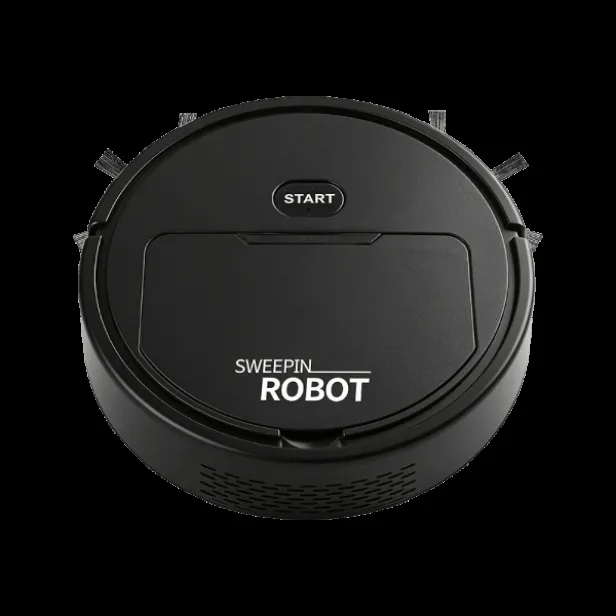
Our pick: the DustaPro Robot Vacuum
One-button robot vacuum: no app, no WiFi. 2.8 in tall to fit under furniture, quiet (60 dB or less), USB charging.
Check today's price →$69.99, or from $49.99 each in bundles
How loud are robot vacuums?
| Sound | Approximate level |
|---|---|
| Quiet library | 30 to 40 dB |
| Quiet robot vacuum | 55 to 60 dB |
| Normal conversation | About 60 dB |
| Typical robot vacuum on max | 65 to 70 dB |
| Upright vacuum | 70 to 80 dB |
| Self-emptying dock during emptying | Often 75 to 85 dB for a few seconds |
| Hair dryer | 80 to 90 dB |
Decibels work on a logarithmic scale: every 10 dB increase sounds roughly twice as loud. So a 60 dB robot sounds about half as loud as a 70 dB one. The CDC's NIOSH explains how noise levels compare and when they become a concern on its noise and hearing loss page. Robot vacuums are far below harmful levels; the issue is comfort, not hearing damage.
Which features make a robot vacuum louder or quieter?
- Suction power: higher suction means a faster, louder fan.
- Max or carpet boost modes: automatically ramp up on rugs and get noticeably louder.
- Self-emptying docks: a loud burst every time the robot returns.
- Brush design: rubber rollers are often quieter than bristle brushes on hard floors.
- Bumping: robots that bump into furniture a lot add knocking sounds.
- Floor type: hard floors echo more than rugs.
- Wear: hair wrapped around brushes and wheels makes robots louder over time.
Is a quieter robot less powerful?
Usually, yes. Quieter robots often use lower suction, which is ideal for daily maintenance on hard floors and low-pile rugs: dust, crumbs and loose pet hair. They're not the best choice for deep cleaning thick carpet, which needs strong suction. Many families pair a quiet robot for daily runs with a regular vacuum for a weekly deep clean. Read robot vacuum vs regular vacuum.
Our pick: the DustaPro Robot Vacuum
One-button robot vacuum: no app, no WiFi. 2.8 in tall to fit under furniture, quiet (60 dB or less), USB charging.
Check today's price →$69.99, or from $49.99 each in bundles
When is the best time to run a robot vacuum?
- While you're out: running errands, at work or walking the dog.
- During noisy times: when the TV or dishwasher is already on.
- In rooms you're not using: close doors to keep it in one area.
- After meals in the kitchen and dining area, when crumbs are fresh.
- Not during calls, naps or bedtime, even with a quiet model.
A simple routine is in a robot vacuum cleaning schedule.
Are quiet robot vacuums better for pets?
Often, yes. Many dogs and cats are startled by loud, unpredictable machines. A quieter robot is less stressful, and you can help pets get used to it:
- Let them sniff the robot while it's off.
- Run it in another room at first.
- Stay nearby and reward calm behavior.
- Keep their bed and food area off-limits by closing a door or using a barrier.
More pet tips in robot vacuums for pet hair.
What about babies and light sleepers?
Even a quiet robot is noticeable in a silent room. Run it when the baby is awake or out of the house, close the nursery door and avoid scheduling it near nap times. For a bedroom, run it in the morning after you get up. See robot vacuums for bedrooms.
Why does noise matter in apartments?
In apartments, robot vacuums can bother neighbors below, especially on hard floors. Quiet models, rugs in high-traffic areas and running the robot at reasonable times all help. Slim robots that fit under beds and couches also clean the dusty areas apartment dwellers can't easily reach. Read robot vacuums for small apartments.
How do you keep a robot vacuum quiet over time?
- Empty the bin after each run.
- Clean the filter regularly.
- Remove hair from brushes and wheels every week.
- Check the wheels for grit that causes grinding.
- Wipe the sensors so it bumps less.
Full guide: robot vacuum maintenance.
Why do simple robots tend to be quieter?
Many advanced robots combine high suction, carpet boost and a self-emptying dock, all of which add noise. A simple robot designed for daily maintenance runs at lower power and without a loud dock, so it stays quieter. It also doesn't need an app, WiFi or mapping, which suits people who want a set-and-forget machine. See robot vacuums without an app.
What makes DustaPro a quiet option?
DustaPro is a one-button robot vacuum: no app, no WiFi, no account. It runs at 60 dB or less, about the level of a conversation, and at 2.8 inches tall it slides under most sofas and beds. It charges by USB and runs about 25 minutes per charge. With 450 Pa of suction, it's designed for daily pickup of dust, crumbs and pet hair on hard floors and low-pile rugs, not deep carpet cleaning. Read our DustaPro review.
Who benefits most from a quiet robot vacuum?
- people who work from home
- families with babies, pets or light sleepers
- apartment dwellers with neighbors below
- older adults who find loud machines stressful; see robot vacuums for elderly parents
- anyone who wants daily tidy floors without the noise of a full vacuum
Which quiet robot vacuum myths can you ignore?
- "All robot vacuums are loud." Many run at conversation level.
- "Quiet means useless." Quiet robots are great at daily maintenance on hard floors.
- "The loudest robot cleans best." More noise often means more suction, which matters mostly on thick carpet.
- "You can run it anytime without noticing." Even quiet robots are best scheduled around calls and sleep.
Does a quiet robot still help with dust and allergies?
Yes, if you run it often. Daily runs at lower power pick up dust, crumbs and pet hair before they build up and get kicked into the air. A good filter matters too: it keeps fine particles inside the bin instead of blowing them back out. The EPA explains what a HEPA filter is and why filtration matters for fine dust. Empty the bin outdoors or over a trash can, and tap the filter clean every few runs to keep airflow strong and noise low. For more on reducing dust at home, see how to reduce dust in the house and dust allergy cleaning tips.
How can you test how loud a robot vacuum is at home?
- Download a free decibel meter app on your phone.
- Place the phone about 3 feet from the robot at ear height.
- Measure on a hard floor and on a rug, since rugs often trigger higher power.
- Compare with a normal conversation in the same room, which is about 60 dB.
Phone apps aren't lab-grade, but they're good enough to compare two machines or settings.
Why does my robot get louder on rugs?
Many robots detect carpet and raise suction automatically, which makes the fan louder. A simple robot without carpet boost keeps a steady, lower sound level. For rugs, a quieter robot works best on low-pile rugs; for thick carpet, plan a weekly pass with a regular vacuum. See robot vacuums for rugs.
Where should you start and park a quiet robot?
Start it in the room where you need it most, such as the kitchen after dinner, and close doors to keep it there. Clear cords, socks and small toys first so it doesn't bump, scrape or stop. Store it in a spot away from bedrooms, so charging lights and the end-of-run sounds don't disturb anyone.
What should you expect in the first week?
The first few runs usually pick up the most dirt and hair from under furniture, so empty the bin after every run. Watch where it gets stuck once, move a cord or close a door, and the following runs become smoother and quieter.
The bottom line
A quiet robot vacuum:
- runs at about 60 dB or less, roughly conversation level
- usually trades some suction for less noise, ideal for daily maintenance
- is quieter without a self-emptying dock and carpet boost
- stays quiet with regular cleaning of brushes, wheels and filters
- works best when scheduled while you're out or busy
DustaPro is a one-button robot vacuum, 2.8 inches tall and 60 dB or less, $69.99 or from $49.99 each in bundles.
Our pick: the DustaPro Robot Vacuum
One-button robot vacuum: no app, no WiFi. 2.8 in tall to fit under furniture, quiet (60 dB or less), USB charging.
Check today's price →$69.99, or from $49.99 each in bundles
Frequently asked questions
How many decibels is a quiet robot vacuum?
About 55 to 60 dB, roughly the level of a normal conversation. Many robots run at 65 to 70 dB on higher settings.
Are robot vacuums quieter than regular vacuums?
Usually. Upright vacuums often run at 70 to 80 dB, while many robots are 55 to 70 dB.
What is the loudest part of a robot vacuum?
On models that have one, the self-emptying dock is often the loudest part, for a few seconds after each run.
Is a quiet robot vacuum less powerful?
Usually. Quieter robots use lower suction, which is ideal for daily maintenance on hard floors and low rugs rather than deep carpet cleaning.
Can I run a robot vacuum at night?
You can, but even quiet robots are noticeable in a silent home. Running it while you're out or busy is usually better.
Do robot vacuums scare pets?
Some pets are startled at first. Quieter models and gradual introductions help most pets get used to them.

Michelle Hert
Michelle looks into the cleaning products that go viral in ads, from toilet foams to mini vacuums and drain cleaners. She reads the product pages, checkout and return policies, trusted safety sources and buyer feedback so you know what a product really does before you buy it. Her reviews are built on manufacturer information, official checkout and return policies, trusted safety sources and buyer feedback, and are updated when offers change. More about Michelle.