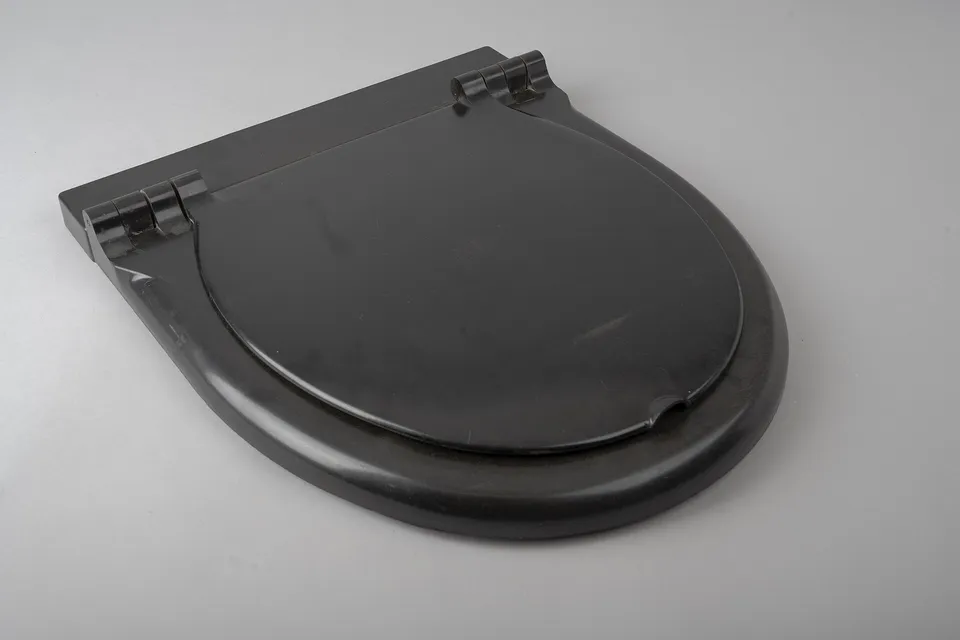
- Put on gloves and close the lid before flushing.
- Spray or wipe the top of the lid, the seat (both sides) and the hinges with a bathroom cleaner or warm soapy water.
- Scrub with a cloth or sponge used only for the toilet; use an old toothbrush around the hinges.
- Disinfect with a product labeled for the seat material, following the contact time.
- Rinse with a damp cloth if the label says to, and dry.
- Remove the seat every few months to clean the hidden spots under the hinges.
The toilet seat is the part of the toilet everyone touches, yet it's often cleaned with a quick wipe and forgotten. Splashes, drips and dust collect on the underside, around the bumpers and especially under the hinges, where yellow stains and smells build up. Seats also come in different materials, plastic, wood, enameled wood and soft-close models, and some cleaners can damage them. This guide explains how to clean a toilet seat properly, how to remove stains, how to clean the hinges, how to remove and reinstall a seat, which cleaners suit each material, how often to clean and when to replace it.
In this guide:
- what you need
- cleaning step by step
- hinges and bumpers
- removing stains and yellowing
- seat materials and cleaners
- how often and when to replace

Our pick: the FizzClean Toilet Cleaning Foam
Foaming toilet cleaning powder: 1 tablespoon, wait 20 minutes, flush. Bleach-free and septic-safe, per FizzClean.
Check today's price →From $15.29 per pack in bundles
What do you need?
- disposable or rubber gloves
- a bathroom cleaner or warm water with dish soap
- a disinfectant labeled for the seat material
- a cloth or sponge used only for the toilet
- an old toothbrush for hinges
- paper towels or a microfiber cloth for drying
How do you clean a toilet seat step by step?
- Close the lid and flush.
- Clean the lid, top and bottom.
- Lift the seat and clean the underside, including the bumpers that rest on the rim.
- Lower the seat and clean the top surface.
- Scrub the hinges with a toothbrush and cleaner.
- Disinfect all surfaces and leave wet for the label's contact time.
- Wipe and dry.
- Move on to the rim, tank and base, working from cleanest to dirtiest.
The EPA explains six steps for safe and effective disinfectant use, including contact time.
Our pick: the FizzClean Toilet Cleaning Foam
Foaming toilet cleaning powder: 1 tablespoon, wait 20 minutes, flush. Bleach-free and septic-safe, per FizzClean.
Check today's price →From $15.29 per pack in bundles
How do you clean the hinges?
Hinges collect drips, dust and urine, which cause yellow stains and smells. Spray cleaner around them, scrub with an old toothbrush and wipe. Every few months, remove the seat to clean underneath the hinges and the bolt area on the bowl. See how to clean toilet seat hinges.
How do you remove a toilet seat for deep cleaning?
- Quick-release seats: many lift off after pressing buttons or sliding a lever at the hinges.
- Standard seats: open the hinge covers, hold the nut underneath (if there is one) and unscrew the bolts.
- Clean the seat in the bathtub or shower with warm soapy water.
- Clean the bolt holes and the top of the bowl around them.
- Reinstall, aligning the seat with the bowl, and tighten firmly but not too hard.
How do you remove stains and yellowing?
| Stain | What to try |
|---|---|
| Yellow urine stains | Baking soda paste, leave 10 minutes, scrub gently and rinse |
| Hard water spots | Diluted white vinegar on a cloth, then rinse (not on wood seats) |
| Makeup or hair dye | Mild dish soap; a little rubbing alcohol on plastic, tested first |
| Yellowing of old plastic | Often permanent; consider replacing the seat |
Never mix vinegar, ammonia or other cleaners with bleach. Health Canada warns to never mix bleach with other cleaning products.
Which cleaners suit each seat material?
| Material | Safe cleaning | Avoid |
|---|---|---|
| Plastic (polypropylene) | Soap, bathroom cleaners, disinfectants per label | Abrasive pads, harsh solvents |
| Thermoset/duroplast | Most bathroom cleaners | Scouring powders |
| Enameled or molded wood | Mild soap and water | Soaking, strong acids, bleach on chips |
| Natural wood | Mild soap, dry immediately | Water pooling, harsh chemicals |
| Soft-close seats | Clean hinges gently | Spraying cleaner into the hinge mechanism |
How often should you clean the seat?
- Daily or every other day: quick wipe of the seat and lid, especially in homes with kids
- Weekly: full clean and disinfect, including hinges
- Every few months: remove the seat for a deep clean
See a toilet cleaning schedule.
When should you replace a toilet seat?
- cracks, chips or peeling finish
- permanent stains or yellowing
- smells that return after cleaning
- loose or broken hinges
- bumpers missing, so the seat wobbles
Why does the toilet still smell after cleaning the seat?
Smells often come from under the hinges, around the base or from urine on the floor and wall nearby. Clean those areas too. See why your toilet smells and urine stains around the toilet.
Any tips for kids' bathrooms?
Kids' bathrooms need more frequent seat cleaning. Keep disinfecting wipes labeled for the surface out of reach, and do a quick daily wipe. A seat with a built-in child seat can help small kids. See how to clean a kids' bathroom toilet.
Where does FizzClean fit in?
Once the seat is clean, the bowl is next. FizzClean is a foaming toilet bowl powder: pour it into the bowl, let the foam work on stains and rings, brush lightly and flush. Use it on its own, without mixing it with other cleaners, and in the bowl only, not on the seat. Packs start at $25.59 each for two and go down to $15.29 each in 5-packs. Read our FizzClean review.
How do you clean a soft-close seat?
Soft-close seats have a hinge mechanism that slows the seat as it lowers. Wipe the hinges with a damp cloth and mild cleaner rather than spraying directly into them, which can wash out lubrication. Many soft-close seats are quick-release, so lift them off for deeper cleaning. If the soft-close stops working, check whether the hinge can be adjusted or replaced.
What about bidet seats?
Electronic bidet seats need gentle cleaning. Unplug the seat or turn it off, wipe the surfaces with a soft cloth and mild soap and clean the nozzle according to the manufacturer's instructions. Many have a self-cleaning nozzle function. Avoid harsh cleaners and abrasive pads, which can damage plastic and electronics.
How do you prep the toilet for guests?
Before guests arrive, clean the seat and lid, wipe the hinges and the base, empty the trash and set out fresh towels. A clean seat is one of the first things guests notice. See how to clean a bathroom before guests.
Should you use a separate cloth for the toilet?
Yes. Use a dedicated cloth, sponge or disposable wipes for the toilet only, and never use them on the sink or counters. Color-coded microfiber cloths make this easy. Wash reusable cloths in hot water after use.
What about the tank and handle?
While you're cleaning the seat, wipe the tank lid, the front of the tank and the flush handle, which everyone touches. Then clean the bowl rim, under the rim and the base. Working top to bottom keeps dirt from dripping onto surfaces you've already cleaned. See how to clean under the toilet rim and how to clean a toilet.
Can you clean a toilet seat without harsh chemicals?
Yes, for routine cleaning. Warm water with a little dish soap, a baking soda paste for stains and a microfiber cloth handle most jobs. Use a disinfectant when someone is sick or after messes, following the label.
How do you care for cleaning tools?
Wash reusable cloths in hot water, let brushes dry and replace sponges often. Store toilet cleaning tools separately from kitchen tools.
Can a new seat make the toilet easier to use?
Yes. Raised seats, seats with handles and soft-close seats can make toilets more comfortable for older adults and kids. When you replace a seat, measure the bowl shape (round or elongated) and the distance between the bolt holes. Quick-release hinges make future cleaning much easier.
What about hard water rings on the seat bumpers?
Bumpers that sit on a wet rim can collect mineral spots. Wipe them with diluted vinegar on a cloth (not on wood seats), rinse and dry. The USGS explains how water hardness leaves mineral deposits.
How do you deal with public toilet seats?
In public restrooms, use a seat cover or wipe the seat with a disinfecting wipe if available, flush with the lid closed when possible and wash your hands well with soap afterward. Hands carry more germs than seats do, so handwashing matters most.
Don't forget the floor around it
Drips from the seat end up on the floor and the base of the toilet. Wipe the floor around the toilet each time you clean the seat, especially in homes with boys and men. A quick daily wipe prevents lasting smells.
What mistakes should you avoid?
- using abrasive pads that scratch the finish
- mixing cleaners
- forgetting the underside and hinges
- using the same cloth on the toilet and sink
How long does it take?
A quick wipe takes a minute; a full clean with hinges and disinfecting takes about five. Removing the seat for a deep clean adds ten minutes.
The bottom line
To clean a toilet seat:
- clean the lid, both sides of the seat, the bumpers and hinges
- disinfect with a product labeled for your seat material
- use baking soda paste for yellow stains; avoid abrasives
- remove the seat every few months to clean under the hinges
- replace seats that are cracked, stained or smelly
FizzClean is a foaming toilet powder for the bowl, used on its own, from $15.29 each in 5-packs.
Our pick: the FizzClean Toilet Cleaning Foam
Foaming toilet cleaning powder: 1 tablespoon, wait 20 minutes, flush. Bleach-free and septic-safe, per FizzClean.
Check today's price →From $15.29 per pack in bundles
Frequently asked questions
What is the best way to clean a toilet seat?
Clean the lid, both sides of the seat, the bumpers and hinges with a bathroom cleaner, then disinfect and dry.
How do you get yellow stains off a toilet seat?
Apply a baking soda paste, leave it 10 minutes, scrub gently and rinse. Old plastic yellowing may be permanent.
How do you clean under toilet seat hinges?
Scrub with an old toothbrush, and remove the seat every few months to reach underneath.
Can I use bleach on a wooden toilet seat?
It's best to use mild soap and water on wood seats and avoid harsh chemicals.
How often should you clean a toilet seat?
A quick wipe daily or every other day and a full clean weekly.
When should you replace a toilet seat?
When it's cracked, chipped, permanently stained, smelly or has loose hinges.

Michelle Hert
Michelle looks into the cleaning products that go viral in ads, from toilet foams to mini vacuums and drain cleaners. She reads the product pages, checkout and return policies, trusted safety sources and buyer feedback so you know what a product really does before you buy it. Her reviews are built on manufacturer information, official checkout and return policies, trusted safety sources and buyer feedback, and are updated when offers change. More about Michelle.