- Fill a plastic bag with white vinegar, enough to submerge the nozzles.
- Tie it around the shower head with a rubber band or twist tie.
- Soak for 1 to a few hours, or overnight for heavy buildup (shorter for brass, nickel or gold finishes; check the maker's advice).
- Remove the bag and scrub the nozzles with an old toothbrush.
- Run hot water for a minute to flush out loosened minerals.
- Wipe the outside with a damp cloth and dry it.
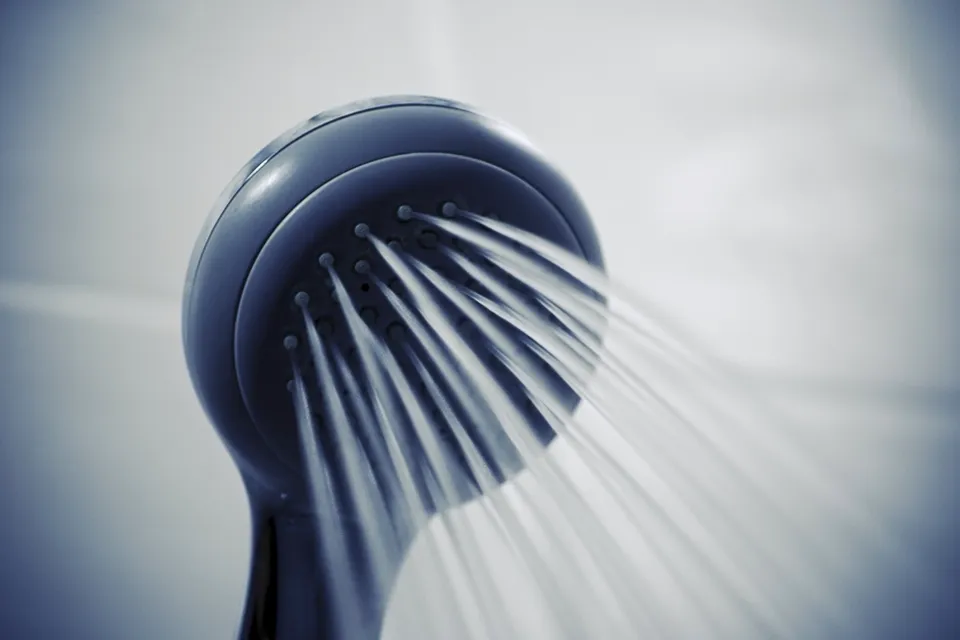
If your shower sprays in random directions, some nozzles barely drip or the water pressure feels weaker than it used to, your shower head is probably clogged with mineral deposits. In areas with hard water, calcium and magnesium build up inside the tiny nozzles and on the face of the shower head, forming white or greenish crust. Soap scum and even bacteria can collect there too. The good news is that cleaning a shower head is cheap and easy, usually with a bag of white vinegar and an old toothbrush. This guide explains why shower heads clog, how to clean a fixed or handheld shower head step by step, how to treat stubborn buildup, which finishes need extra care, how often to clean and when to replace it.
In this guide:
- why shower heads clog
- the vinegar bag method
- removable and handheld shower heads
- special finishes
- stubborn buildup and filters
- how often to clean

Our pick: the FizzClean Toilet Cleaning Foam
Foaming toilet cleaning powder: 1 tablespoon, wait 20 minutes, flush. Bleach-free and septic-safe, per FizzClean.
Check today's price →From $15.29 per pack in bundles
Why do shower heads get clogged?
- Hard water minerals (calcium and magnesium) leave scale as water evaporates
- Soap scum on the face of the shower head
- Sediment from old pipes or after plumbing work
- Biofilm that grows in warm, damp spots
The USGS explains water hardness and why some areas see more buildup than others.
How do you know it needs cleaning?
- uneven or sideways spray
- lower water pressure
- blocked or dripping nozzles
- white, chalky or greenish crust
- black or pink spots around the face
How do you clean a shower head with vinegar?
- Fill a sturdy plastic bag about halfway with white vinegar.
- Slip it over the shower head so the face is fully submerged.
- Secure it with a rubber band, zip tie or twist tie.
- Let it soak: 1 hour for light buildup, a few hours or overnight for heavy scale on chrome. Check the maker's advice for special finishes.
- Remove the bag and discard the vinegar.
- Scrub the nozzles with an old toothbrush; rubber nozzles can be rubbed with a finger to break off scale.
- Run hot water for a minute to flush out debris.
- Wipe and dry the outside to prevent new spots.
Our pick: the FizzClean Toilet Cleaning Foam
Foaming toilet cleaning powder: 1 tablespoon, wait 20 minutes, flush. Bleach-free and septic-safe, per FizzClean.
Check today's price →From $15.29 per pack in bundles
How do you clean a removable or handheld shower head?
- unscrew the shower head or handheld from the arm or hose (wrap the nut with a cloth if using pliers)
- soak it in a bowl of white vinegar for 1 hour to overnight
- remove the small filter screen at the connection, if there is one, and rinse it
- scrub the nozzles and rinse well
- wrap the arm threads with new plumber's tape if needed and reattach by hand
- run water to check for leaks
Do special finishes need extra care?
| Finish | Care |
|---|---|
| Chrome | Vinegar is usually fine; rinse well |
| Brushed nickel | Short soaks; check the manufacturer's advice |
| Oil-rubbed bronze | Avoid long acid soaks; use mild soap and water |
| Brass or gold | Use mild cleaners; acids can dull the finish |
| Matte black | Gentle soap and water; test vinegar on a hidden spot |
What about stubborn buildup?
- repeat the vinegar soak
- use a citric acid solution (a tablespoon per cup of warm water), which works well on scale
- clear individual nozzles with a toothpick or the cleaning pin that came with the shower head
- use a descaler made for bathroom fixtures, following the label
Never mix vinegar or descalers with bleach. Health Canada warns to never mix bleach with other cleaning products.
Can shower heads hold bacteria?
Yes. Warm, damp shower heads can grow biofilm, especially if the shower isn't used often. Regular cleaning, running hot water for a minute before stepping in after a long trip and replacing old shower heads help. Black or pink spots around the face are a sign to clean. See pink mold in the shower.
How often should you clean a shower head?
- Hard water: every 1 to 2 months
- Soft water: every 3 to 6 months
- Weekly: a quick wipe of the face and nozzles
Add it to your bathroom cleaning checklist and weekly cleaning schedule.
When should you replace a shower head?
- it's still weak or uneven after cleaning
- it leaks at the connection after new plumber's tape
- the finish is badly corroded
- it's very old and you want a water-saving model
What else should you descale in the bathroom?
Hard water leaves scale on faucets, the tub, glass doors and the toilet bowl too. While the shower head soaks, wipe faucets with vinegar on a cloth, rinse glass doors and treat the toilet ring. See how to clean a bathtub, hard water stains in the toilet and how to clean a bathroom fast.
Where does FizzClean fit in?
The toilet often has the same hard water problem as the shower head: a ring at the waterline and mineral stains. FizzClean is a foaming toilet bowl powder: pour it into the bowl, let the foam work, brush lightly and flush. Use it on its own, without mixing it with vinegar or other cleaners, and in the toilet only. Packs start at $25.59 each for two and go down to $15.29 each in 5-packs. Read our FizzClean review.
Can you use baking soda instead of vinegar?
Baking soda alone doesn't dissolve mineral scale, because scale responds to acids. It's useful as a gentle scrub for soap scum on the face of the shower head: mix a paste with a little water, scrub with a toothbrush and rinse. For hard water buildup, vinegar or citric acid works much better. Don't mix baking soda and vinegar in the same bag; they neutralize each other and lose most of their cleaning power.
What about shower filters?
Some people add a shower filter to reduce chlorine or sediment. Filters need replacing on schedule, or they can slow water flow and collect buildup themselves. Most filters don't soften water, so a shower head with a filter still needs regular descaling in hard water areas.
What else causes low shower pressure?
- a clogged filter screen where the shower head connects
- a flow restrictor inside the head (standard on water-saving models)
- a partly closed valve
- scale in the shower valve itself
- low pressure throughout the house
If every faucet is weak, the problem isn't the shower head.
How do you keep glass doors and fixtures spot-free?
Hard water that cleans up the shower head also leaves spots on glass doors and faucets. Squeegee the glass after each shower, wipe fixtures dry with a microfiber cloth and wash them weekly with a mild cleaner. A quick daily wipe prevents scale from building up at all. See how to clean grout for the rest of the shower.
What if you just moved into a new home?
A shower head in a new-to-you home may have years of buildup and biofilm. Unscrew it and soak it overnight in vinegar (if the finish allows), clean the filter screen and run hot water for a few minutes before the first shower. If it still sprays unevenly, a new shower head is inexpensive and takes minutes to install with fresh plumber's tape.
How do you clean a handheld shower hose?
Wipe the hose with a cloth and mild soap, paying attention to the ends where water sits. Check for kinks, cracks or leaks at the connections, and replace the washers if it drips. A hose that hangs in a loop collects water and grime, so let it hang straight or use a holder that keeps it off the tub floor.
How long does the whole job take?
About 5 minutes of work plus soaking time. Set up the vinegar bag before bed and finish in the morning: scrub, flush and wipe. It's one of the easiest bathroom jobs with the most noticeable result.
How do you use citric acid on a shower head?
Citric acid powder, sold for canning and descaling, is a strong, odor-free alternative to vinegar. Dissolve about a tablespoon in a cup of warm water, pour it into a bag or bowl and soak the shower head for 30 to 60 minutes. Scrub and rinse well. Use it on chrome; check the maker's advice for special finishes, and never mix it with bleach.
How do you prevent buildup?
Wipe the face of the shower head dry once a week, run hot water for a few seconds after each shower to flush the nozzles and rub silicone nozzles with your thumb to break off fresh scale before it hardens.
The bottom line
To clean a shower head:
- soak the face in a bag of white vinegar for 1 hour to overnight
- scrub the nozzles with an old toothbrush and flush with hot water
- soak removable heads in a bowl and rinse the filter screen
- use gentler methods on brass, bronze, gold and matte finishes
- clean every 1 to 3 months in hard water areas
FizzClean is a foaming toilet powder you use on its own, from $15.29 each in 5-packs.
Our pick: the FizzClean Toilet Cleaning Foam
Foaming toilet cleaning powder: 1 tablespoon, wait 20 minutes, flush. Bleach-free and septic-safe, per FizzClean.
Check today's price →From $15.29 per pack in bundles
Frequently asked questions
What is the best way to clean a shower head?
Soak the face in a plastic bag of white vinegar for 1 hour to overnight, scrub the nozzles and flush with hot water.
How long should I soak a shower head in vinegar?
About 1 hour for light buildup and a few hours or overnight for heavy scale on chrome. Use shorter soaks on special finishes.
Can vinegar damage a shower head?
It can dull brass, bronze, gold and some matte finishes. Check the maker's advice and test first.
How do I clean a shower head without removing it?
Use the vinegar bag method: tie a bag of vinegar around the head so the nozzles are submerged.
How often should I clean my shower head?
Every 1 to 2 months with hard water and every 3 to 6 months with soft water.
Why is my shower pressure still low after cleaning?
Check the filter screen at the connection; if it's clear, the shower head or valve may need replacing.

Michelle Hert
Michelle looks into the cleaning products that go viral in ads, from toilet foams to mini vacuums and drain cleaners. She reads the product pages, checkout and return policies, trusted safety sources and buyer feedback so you know what a product really does before you buy it. Her reviews are built on manufacturer information, official checkout and return policies, trusted safety sources and buyer feedback, and are updated when offers change. More about Michelle.