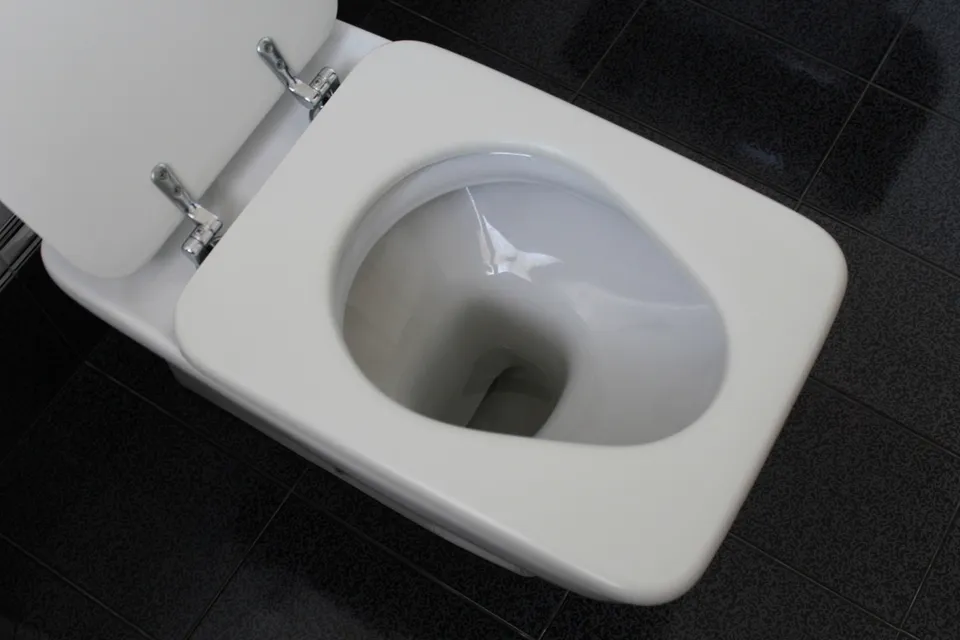
- Look first with a small mirror and a flashlight to see what's there: scale, rust, mold or grime.
- Apply a toilet cleaner directly under the rim and let it sit 15 to 20 minutes.
- Scrub with a brush that has an angled or rim-shaped head.
- Clear clogged rim holes with a small brush or a bent wire hanger end wrapped in cloth.
- Flush, check again and repeat for stubborn buildup.
The bowl looks clean, the seat is wiped, but there's still a faint smell, or dark streaks keep running down from the top of the bowl a day after you clean. The reason is usually hiding under the rim, the curved lip around the top of the bowl that you can't see unless you bend down and look up.
Under the rim is where water enters the bowl with every flush, so it stays damp, collects mineral deposits from hard water and grows bacteria and mold. It's also the spot a quick swish with the toilet brush misses. This guide explains what builds up there, how to clean it properly and how to keep it clean with very little effort.
What builds up under the toilet rim?
| Buildup | What it looks like | Cause |
|---|---|---|
| Limescale | White, chalky or tan crust around the rim holes | Hard water minerals |
| Rust stains | Orange or reddish-brown streaks | Iron in the water or old pipes |
| Mold and mildew | Black or dark green spots and streaks | Moisture and residue |
| Pink film | Pink or orange slime | Airborne bacteria |
| Grime and urine scale | Yellow-brown film, odor | Splashes and residue |
The USGS explains that hard water carries dissolved calcium and magnesium, which are left behind as water evaporates, and the rim is wet and drying all day.
Why does cleaning under the rim matter?
- Streaks: buildup in the rim holes washes down the bowl with every flush, so the bowl looks dirty again quickly.
- Odors: bacteria under the rim are a common hidden source of toilet smells.
- Weak flushing: clogged rim holes reduce the water that rinses the bowl, so it cleans itself less well.
- Recurring rings: pink and black rings often start under the rim and spread down.
How do you see under the toilet rim?
Put on gloves, kneel next to the toilet and hold a small hand mirror under the rim with a flashlight or your phone light shining on it. Look at the row of small holes along the underside, and at the larger jet hole at the bottom of the bowl if your toilet has one. White crust, dark spots or orange streaks around the holes show you exactly what you're dealing with. Many people are surprised by how much buildup is hiding there.
How do you clean under the toilet rim step by step?
- Ventilate the bathroom and put on gloves.
- Flush once to wet the area, then lower the water level by turning off the supply valve behind the toilet and flushing again, if you want to work on the bottom of the bowl as well.
- Apply a toilet cleaner directly under the rim, all the way around. Angled-neck bottles are made for this.
- Let it sit 15 to 20 minutes, or the time on the label, so it softens scale and grime.
- Scrub under the rim with a toilet brush that has an angled head or a rim-shaped lip. Work your way around slowly.
- Clean the rim holes individually with a small stiff brush, like an old toothbrush or a grout brush.
- Turn the water back on and flush. Watch the water: it should flow evenly from all around the rim.
- Check with the mirror again and repeat for remaining spots.
How do you unclog the rim holes?
If water trickles weakly from some holes, or the flush swirls unevenly, scale is probably blocking them. After a cleaner has softened the deposits, poke each hole gently with a small tool: a stiff brush, a plastic toothpick or the end of a wire hanger wrapped in a cloth so it doesn't scratch. For heavy scale, some people turn off the water, drain the tank and pour a cup of white vinegar into the overflow tube in the tank, which feeds the rim, then let it sit for an hour or more before flushing. If you use vinegar, never combine it with bleach or other cleaners. Health Canada warns that mixing bleach with acids can release toxic gases.

What's the easiest way to keep the rim clean?
Once the rim is clean, the goal is to stop buildup from returning, and that means a weekly routine you'll actually keep. FizzClean is a foaming toilet cleaning powder: add 1 tablespoon to the bowl, let the foam work for about 20 minutes, then flush. According to the brand, it's bleach-free and septic-safe and designed to dissolve stains, limescale, rust marks and grime. The foam spreads across the bowl and up toward the water line while you wait, and each flush afterward sends clean water through the rim. Use it on its own, without mixing it with other products, and give the rim a quick brush now and then for the spots foam can't reach.
Read our FizzClean review (4.5/5) and our full guide on how to clean a toilet the easy way.

A weekly clean that keeps scale from building up
FizzClean foaming toilet powder: 1 tablespoon, wait 20 minutes, flush. Bleach-free and septic-safe, per the brand. From $15.29 per pack in bundles, with a 30-day refund guarantee.
Check today's price →From $15.29 per pack in bundles
What's the best brush for under the rim?
- Angled or curved heads reach up under the lip better than a straight round brush.
- Rim-lip brushes have an extra tuft of bristles on top designed for this exact spot.
- Silicone brushes dry faster and hold less grime, though they're less aggressive on scale.
- A small detail brush (an old toothbrush works) for the holes themselves.
Replace your toilet brush every few months, and let it drip dry over the bowl before putting it back in its holder. A wet brush in a closed holder grows bacteria and mold.
What about rimless toilets?
Many newer toilets are "rimless" or have an open rim: instead of a hollow lip with holes, the water enters through a channel or a single jet that sweeps around the bowl. They're designed to be easier to clean because there's no hidden ledge. If you have one, the same routine applies, but the job is quicker: apply cleaner along the top inside edge, let it sit and brush. If you're replacing a toilet, a rimless design is worth considering if you hate cleaning under the rim.
Can a dirty rim make the whole bathroom smell?
Yes. Urine splashes and bacteria under the rim are one of the most common hidden sources of a lingering toilet smell, especially in homes with boys or men, because splashes reach the underside of the rim and dry there. If your bathroom smells even after you clean the bowl, the rim, the seat hinges and the floor around the base are the first places to check. Our guide to why your toilet smells goes through every possible source.
What if streaks keep coming back?
If you clean under the rim and dark streaks return within days, the source may be the tank. Water flows from the tank through the rim, so mold, rust or sediment in the tank reseeds the rim and bowl with every flush. Lift the tank lid and look. If you see buildup, see how to clean a toilet tank. Color matters too: pink film is bacteria (pink ring in toilet), black spots are often mold or manganese (black stains in the toilet bowl), and orange streaks usually mean iron.
How often should you clean under the rim?
| Task | How often |
|---|---|
| Weekly bowl treatment and quick rim brush | Weekly |
| Mirror check under the rim | Monthly |
| Rim holes cleaned individually | Every 2 to 3 months, or when the flush gets weak |
| Tank inspection and clean | 2 to 4 times a year |
Which mistakes should you avoid?
- Scrubbing without letting the cleaner sit: scale needs time to soften.
- Mixing products to make them "stronger."
- Metal tools or steel wool, which scratch the glaze and make stains stick.
- Ignoring the tank when streaks keep returning.
- Using the same old brush for years.
How do you handle very hard water?
In hard water areas, scale under the rim can build up in just a few weeks. A weekly bowl routine is non-negotiable, and it helps to look under the rim every month instead of every few months. If every faucet, showerhead and kettle in the house has white crust too, a water softener is the long-term fix. Until then, our guide to hard water stains in the toilet explains how to remove existing scale safely.
The bottom line
Under the toilet rim is where scale, mold and bacteria hide, causing streaks, odors and weak flushing. Look with a mirror, apply a toilet cleaner and let it sit, scrub with an angled brush, clear the rim holes and check the tank if streaks return. Then keep it clean with a weekly routine that takes almost no effort.
Our pick for the weekly clean is FizzClean. Check today's FizzClean price.
Sources
- U.S. Geological Survey. Hardness of Water.
- Health Canada. Never Mix Bleach With Other Cleaning Products.
- Official FizzClean product page, checked October 2026.
Frequently asked questions
How do you clean under the rim of a toilet?
Apply a toilet cleaner directly under the rim, let it sit 15 to 20 minutes, scrub with an angled toilet brush and clean the rim holes with a small stiff brush, then flush.
How do I see under my toilet rim?
Hold a small hand mirror under the rim with a flashlight or phone light shining on it, and look at the row of holes along the underside.
How do you unclog toilet rim holes?
Soften the scale with a cleaner, then poke each hole gently with a stiff brush or a cloth-wrapped wire. Some people pour white vinegar into the tank's overflow tube to soak the rim.
Why does black stuff come from under my toilet rim?
Mold, bacteria and minerals collect in the rim holes, and each flush washes a little down the bowl. Clean the rim and check the tank.
How often should I clean under the toilet rim?
Brush it weekly as part of your bowl clean, check it with a mirror monthly and clean the holes individually every two to three months.
Does FizzClean clean under the rim?
FizzClean foam spreads across the bowl toward the water line while it works, and flushing sends clean water through the rim. Give the rim a quick brush now and then too.

Michelle Hert
Michelle looks into the cleaning products that go viral in ads, from toilet foams to mini vacuums and drain cleaners. She reads the product pages, checkout and return policies, trusted safety sources and buyer feedback so you know what a product really does before you buy it. Her reviews are built on manufacturer information, official checkout and return policies, trusted safety sources and buyer feedback, and are updated when offers change. More about Michelle.